

Switch to
You are planning an event and are looking for a suitable keynote speaker for your program. But what does that actually mean?
I often observe a misunderstanding: many people think of a “keynote speaker” as a celebrity who somehow adds glamor, puts on an impressive show, and entertains the audience. That can work. But it wastes potential.
Keynotes work on two levels at the same time. On the one hand, there is the content level: the topic being discussed, like shaping the future, AI, leadership, and industry trends. And then there is the dramaturgical level: the role that the presentation plays in the day’s proceedings.
Many keynote speakers focus exclusively on the first level. They have a standard presentation that they give in every context. That works. But it wastes potential.
Those who consciously design both levels shape the overall perception of the event. Participants may leave the event with either concrete insights or just a vague impression of “It was nice.”
Opening and closing keynotes fulfill different tasks. If you understand this, you can design events with a more lasting effect.
The fundamentals: Your goals
Before you think about keynotes, one question: What do you want to achieve with your event?
That sounds obvious. But I often find that this question is not clearly answered. Or that different people involved give different answers. Is it about imparting knowledge? To facilitate new business contacts? Strengthening the corporate culture? Launching a product? Bringing the industry together?
The clearer your goals are, the better you can plan the dramaturgy. And the better you can brief your speakers. It helps me enormously to know what an event is working towards. Then I can tailor my keynote speech so that it contributes to exactly that.
The opening keynote: Aligning everyone for the day
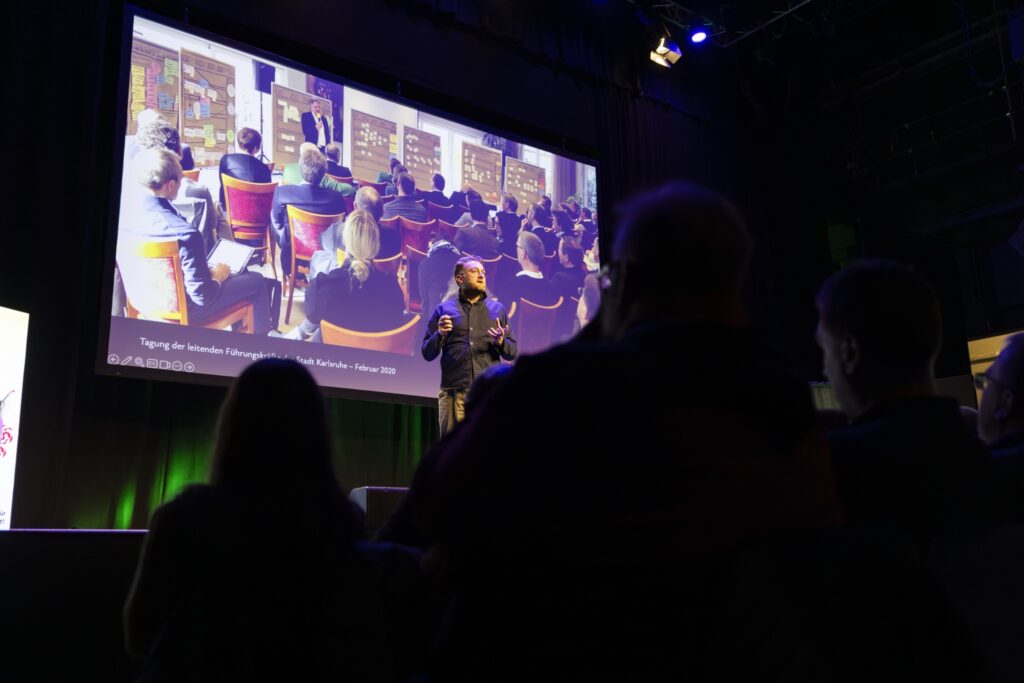
The opening keynote is the starting point. It is typically followed by a welcome from the organizers. And then?
Then two things happen at the same time: the speaker introduces the topic and brings the audience together.
One example: I often give keynotes on the topic of “Shaping the future.” This concept fits as an opening theme because it addresses exactly what most events are about. Developing new products, winning new customers, designing strategies for tomorrow. That is the content level: How do we think about the future? What does “shaping” even mean? Where are the opportunities?
But at the same time, I work on the dramaturgical level: I pick up the audience where they are. I orient everyone for the day. I give them questions to guide them through the following sessions.
Engaging the audience. Your participants come from a wide variety of backgrounds. Some have just arrived; others have just answered emails. Some are familiar with the topic; others are newcomers. The opening keynote helps everyone get there. Physically and mentally.
Create a common vocabulary. The speaker gets everyone on the same page. Introduces key terms, explains perspectives, and sets the framework for the rest of the day. This approach sounds banal, but it makes a difference: if everyone works with the same terms, the later sessions will be more productive.
Invite reflection. For me, this is the most important part of an opening keynote: getting the participants to ask themselves questions. What do I want from this day? What questions do I bring with me? What am I looking for inspiration for? If you go into an event with a clear intention, you will take more away with you. Sounds obvious. But it rarely happens by itself.
Prepare them for the rest of the program. A successful opening sets the mindset for all subsequent sessions. It helps participants to select the right workshops and presentations. It prepares them to get the most out of the day.
Questions for your planning
- How much time have you planned for the opening keynote?
- Is there a welcome from the management beforehand or does the keynote start the day?
- Should the keynote address directly introduce the specialist topic or rather set an inspiring framework?
- Will there then be parallel sessions to prepare for the opening?
The closing keynote: seal the deal
The closing keynote is a particular challenge. Everyone is pumped full of information, concentration wanes, and thoughts wander to the afterparty or the journey home. Nevertheless, this moment decides whether your event will have a lasting effect.
Show the common threads. What did we hear today? What patterns are there between the different sessions? What picture has emerged? When the speaker reviews the program, the audience automatically reflects on it. “Oh right, we had that session too.” Such moments hold immense value.
Encourage concrete next steps. Give explicit space for: What do I take with me? What else do I want to think about? What concrete steps am I planning? This type of inquiry is the key to sustainable impact. We lose much on the way home without this reflection.
Provide questions for networking. I always try to give two or three questions that work for dinner or networking. This helps to skip the usual small talk and go straight into more depth. It carries the impact of the event into the informal part.
Questions for your planning
- Have you had the opportunity to plan a conclusion, or will the event conclude on its own?
- When is the slot: before or after networking?
- Should the speaker know the program for the day and refer to it?
- What happens after the keynote: homeward journey or further program?
Why close collaboration makes all the difference
Many keynote speakers work like this: they have a ready-made presentation, come to the event, give it and then leave. This procedure can work well if the topic is right and the speaker is convincing.
But it only uses the content level. The dramaturgical level remains untouched.
I work differently. I don’t see myself as someone who comes in, says something and leaves again. I see myself as part of the event team. I see myself playing an important role in the dramaturgical process.
The more context I get, the better the result. What is the event about? What is the focus? What do you want people to take away with them? I clarify questions like these in briefing discussions.
This allows me to design both levels: to tailor the content to your context and at the same time to consciously use the dramaturgical role of the keynote in the course of the day.
You don’t need a ready-made briefing. Many event organizers think they have to have everything perfectly planned before they ask for a speaker. That doesn’t have to be the case. I am happy to help you gain clarity. After our first meeting, I create a detailed rebriefing: a document that shows how I have understood your event. This often helps you sharpen your own objectives.
Lead time is flexible. More time means more relaxed preparation and opens up possibilities such as accompanying promotional content. However, requests at short notice are possible. In times when topics develop quickly, this technique even has advantages: We don’t determine the specific content too early. I outline various directions, and we make the final decision around four weeks before the event. This process keeps the keynote up to date.
I recently described what this can look like in concrete terms: How a keynote is created
Keynotes briefly summarized
- Keynotes work on two levels: Content and dramaturgy.
- The opening keynote introduces the topic and sets everyone up for the day.
- The final keynote shows the common thread and ensures a lasting effect.
- Close cooperation with the speaker makes all the difference.
For organizers
If you are planning a keynote: Talk to me. I will be happy to help you work out the role of a keynote for your event. We’ll look together: Who is the target audience? What do they need to get started? What are the goals of the event?
The first meeting is non-binding. After that, you decide whether it’s a good fit.
Feature photo © Ralf Rödel